
Published on: October 12, 2026
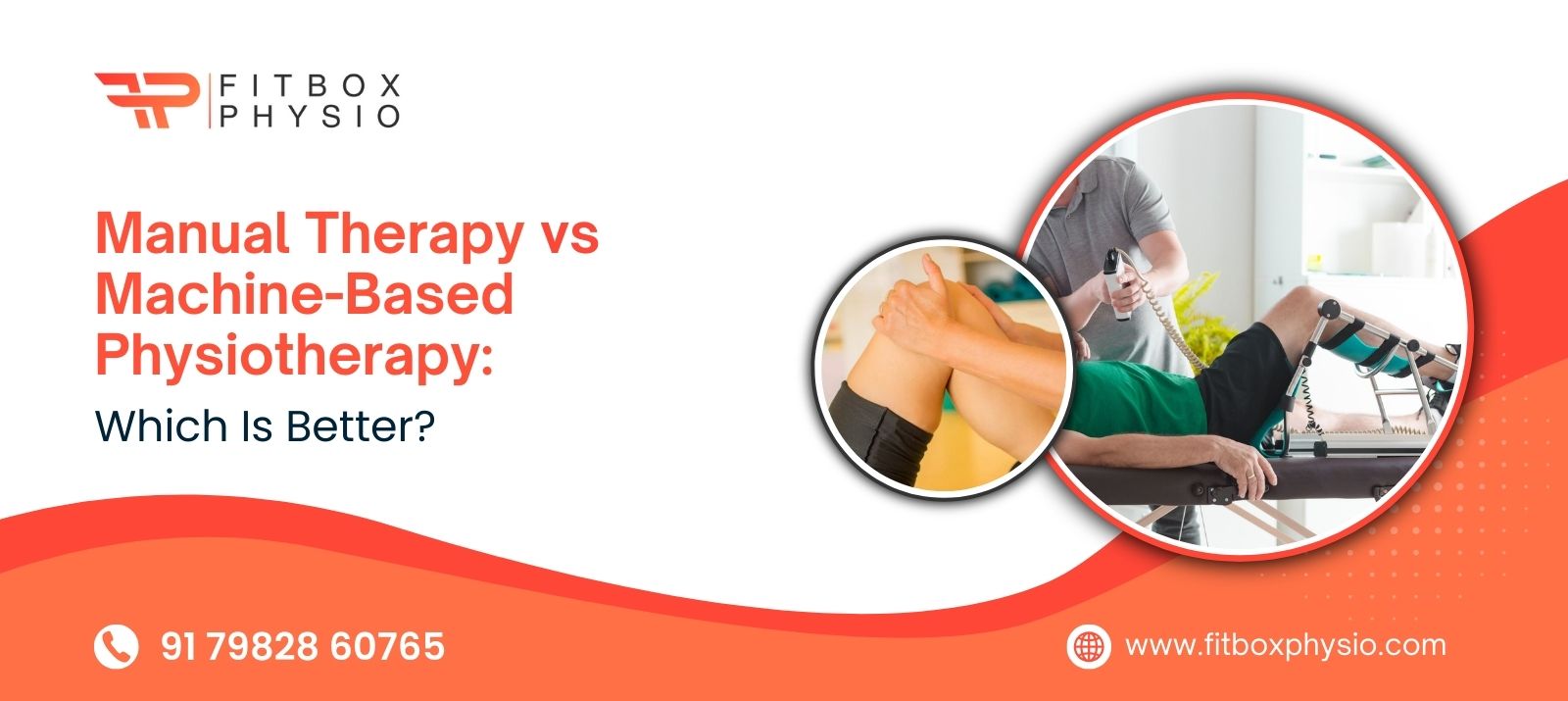
If you’ve ever visited a physiotherapist, you’ve probably noticed two very different styles of treatment.
In one session, the therapist may use their hands to stretch, mobilize, or release tight muscles.
In another, you might be connected to machines that deliver heat, electrical stimulation, or ultrasound.
This often leads to a common and very valid question:
Manual therapy vs machine-based physiotherapy, which one is actually better?
This blog will help you understand the difference, the benefits of each, and how to choose what’s best for your body.
If you’re searching for manual therapy in Krishna Nagar, Delhi, or typing “manual therapy near me” into Google, then Fitbox Physio is here to help.
What Is Physiotherapy?
Physiotherapy focuses on restoring movement, reducing pain, and improving function after injury, surgery, or long-term strain. A trained physiotherapist looks at how your muscles, joints, nerves, and posture work together, and then designs treatment to correct problems at the root.
Physiotherapy usually includes:
- Hands-on techniques
- Exercises
- Movement correction
- Sometimes, supportive machines
The real difference lies in how the treatment is delivered
What Is Manual Therapy?
Manual therapy is exactly what it sounds like, hands-on treatment performed by a skilled physiotherapist.
It includes techniques such as:
- Joint mobilization
- Soft tissue release
- Muscle stretching
- Trigger point therapy
- Myofascial release
With manual therapy in Krishna Nagar, Delhi at Fitbox Physio, the therapist actively monitors how your body responds and adjusts treatment in real time.
Why does manual therapy feel different?
- It’s personalized
- Pressure and movement are adjusted instantly
- The therapist responds to pain, stiffness, or resistance immediately
This is why many people specifically search for manual therapy near me when dealing with long-standing pain or stiffness.
What Is Machine-Based Physiotherapy?
Machine-based physiotherapy uses equipment to support healing and pain relief. Common modalities include:
- Ultrasound therapy
- Electrical stimulation (TENS/IFT)
- Heat or cold therapy
- Traction machines
- Laser therapy
These machines are often used to:
- Reduce pain
- Relax muscles
- Improve blood flow
- Prepare the body for exercise or manual work
Machines are not “bad”, they simply serve a different purpose.
The Key Difference between Manual and Machine-Based Therapy
Here’s the easiest way to understand it:
- Manual therapy treats the cause of the problem
- Machine-based therapy helps manage symptoms
Both can be useful, but they are not interchangeable.
When Manual Therapy Works Best?
Manual therapy is especially effective when pain or movement restriction is caused by:
- Joint stiffness
- Muscle tightness
- Postural imbalance
- Chronic neck or back pain
- Frozen shoulder
- Sports injuries
- Trigger points
A skilled physiotherapist can pinpoint the restriction and correct it with precise techniques.
This is why a trained physiotherapist in Krishna Nagar, Delhi, at Fitbox Physio emphasizes hands-on assessment and treatment rather than relying only on machines.
When Machine-Based Physiotherapy Helps
Machine-based therapy can be useful:
- In acute pain stages
- When inflammation is high
- To reduce muscle spasms
- As a warm-up before exercises
- As support alongside manual therapy
Machines often make people feel relaxed and comfortable, especially during the early phase of recovery.
Is One Better Than the Other?
This is the most important part.
The honest answer:
Neither is “better” on its own.
The best results come from the right combination, guided by an experienced physiotherapist.
However, if forced to choose, manual therapy tends to deliver longer-lasting results, especially for chronic and movement-related problems.
Machines can reduce pain temporarily, but manual therapy:
- Restores joint mobility
- Improves muscle function
- Corrects movement patterns
- Prevents recurrence
Role of the Physiotherapist Matters More Than the Method
Here’s a key truth many people miss:
The skill of the physiotherapist matters more than the equipment used.
A highly trained physiotherapist:
- Knows when to use hands-on treatment
- Knows when machines can help
- Knows when exercises are needed
- Adjusts treatment session by session
Machines don’t think. Therapists do. Period.
Common Conditions Where Manual Therapy Shines
Manual therapy is often preferred for:
- Chronic back pain
- Neck stiffness from desk work
- Shoulder pain
- Sciatica
- Sports injuries
- Postural issues
- Muscle tightness that doesn’t respond to rest
These are the kinds of issues that respond especially well to hands-on care.
What About Recovery Speed?
Manual therapy often:
- Reduces recovery time
- Improves long-term outcomes
- Lowers dependency on repeated sessions
Machine-only treatment may feel good temporarily, but without correcting movement and tissue restrictions, pain may return.
What Happens at Fitbox Physio?
At Fitbox Physio, treatment is not machine-dependent or manual-only. Instead, the approach is:
- Detailed assessment
- Identification of root cause
- Hands-on manual therapy where needed
- Supportive machine therapy if required
- Corrective exercises and posture guidance
This balanced method ensures faster, safer, and more sustainable recovery.
How to Choose What’s Right for You
Ask these questions during your visit:
- Is the therapist assessing my movement?
- Are they explaining the cause of my pain?
- Is treatment personalized or generic?
- Am I improving function, not just reducing pain?
A good physiotherapist will always focus on your recovery, and not dependency.
Manual vs Machine-Based Physiotherapy
If your goal is:
- Long-term relief
- Better movement
- Reduced recurrence
- Personalized care
Manual therapy should play a central role.
Machines are helpful tools, but hands-on expertise is what truly restores the body.
If you’re searching for manual therapy near me, remember: the right physiotherapist doesn’t choose between hands or machines, they choose what your body needs.
Are you hiding your pain, mate?
Pain doesn’t come from nowhere, and it rarely disappears with shortcuts. Whether you’re dealing with a new injury or long-standing discomfort, the right combination of manual therapy, expert guidance, and movement correction can make all the difference.
And that journey always starts with a skilled physiotherapist who understands your body, not just the equipment.
If you’re looking for machine and manual therapy in Krishna Nagar, Delhi, FitBox Physio focuses on treating the root cause, ot just the symptoms, so your recovery is effective and long-lasting.
FAQ
Do I need a doctor’s referral to start physiotherapy?
In most cases, no referral is needed. You can directly consult a physiotherapist, who will assess your condition and recommend the right treatment approach based on your symptoms and goals.
Will exercises be part of my physiotherapy even if I receive manual therapy?
Yes. Manual therapy helps reduce pain and improve movement, but exercises are essential to maintain results. Your physiotherapist will guide you with simple, targeted exercises to strengthen muscles and prevent the pain from returning.
How many manual therapy sessions are usually needed?
The number of sessions depends on your condition, pain duration, and movement restrictions. Some patients feel relief within a few sessions, while long-term or postural issues may need a structured treatment plan over several weeks.
